
Exploring Conquest, War, Famine, and Death in the Book of Revelation.
If you take a look at the news today, it feels like every headline highlights crisis after crisis! Wars are raging in Ukraine and Gaza. Iran and Israel are on the brink of war. Sudan, Congo, Myanmar, and Haiti are all struggling with violence and chaos. Everywhere you turn, there seems to be a new disaster or nation in crisis.
It is heavy, isn’t it?
Sometimes it honestly feels like the world is spinning out of control. People often talk about “unprecedented times,” but if we’re being honest, trouble and turmoil aren’t exactly new. What is new is how interconnected our world is. We see every tragedy, every war, every disaster, sometimes all at once. It truly can feel overwhelming!
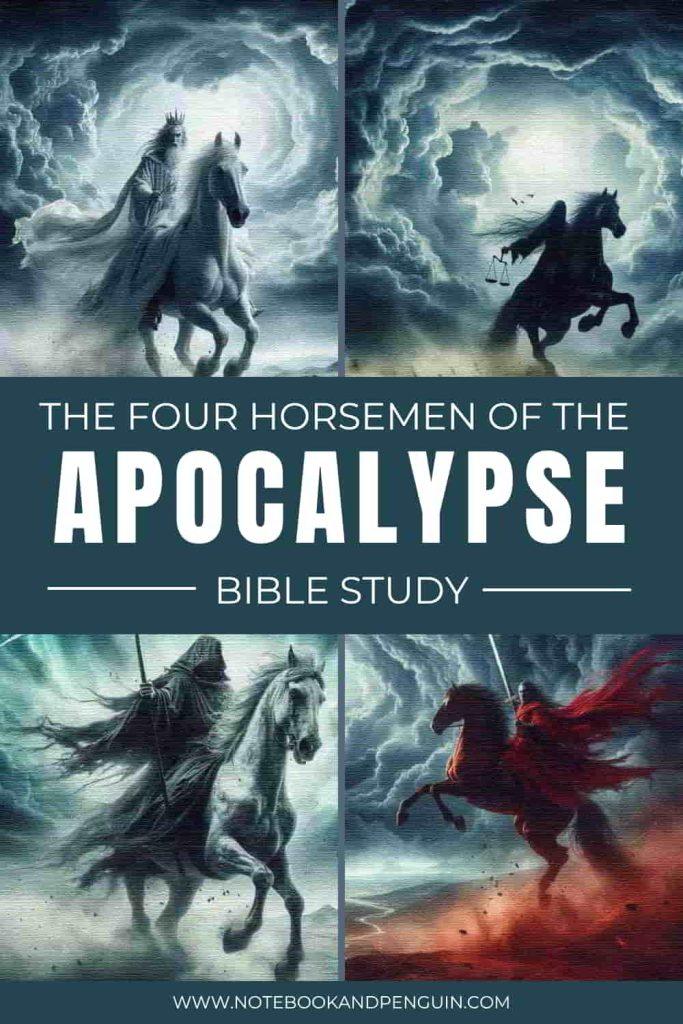
Maybe you’ve even heard people say, “It’s like the end times are here,” and that’s where the Four Horsemen of the Apocalypse come in.
You’ve probably heard of them, biblical horsemen from the book of Revelation that symbolize conquest, war, famine, and death. And right now, their story hits a little too close to home, especially when we read about war breaking out, food shortages, and new diseases.
The ancient warning of the Horsemen doesn’t feel quite so ancient after all!
The good news is that you don’t have to be a Bible scholar to figure out what the Four Horsemen mean or what they can teach us right now. The book of Revelation was written for real people facing hard times, not just for experts or theologians. So, in this study, we’re going to dig into each horseman’s role, unpack what they represent, and ask what the heck all this means for us.
If you enjoy this study, please pin it so others can also find it 🙂
Understanding The Book Of Revelation
Before we meet the Horsemen, let’s take a look at the Book of Revelation itself. It was written by a man named John, who simply introduces himself as “John” in the scriptures. Most Christians throughout history believe this is the same John who was one of Jesus’ twelve disciples – the Apostle John.
John was exiled to a rocky island called Patmos (just off the coast of modern-day Turkey) in around AD 95. During this time, Christians were being persecuted for their faith and were living in constant fear.
John wrote the Book of Revelation for seven real churches in Asia Minor, giving them a glimpse of the future. Reminding them (and us!) that God still had a plan, even though it looked like the world was falling apart.
The word “Revelation” comes from a Greek word meaning “unveiling” or “disclosure.” So, this book is really about revealing something important, something that was hidden, but needed to be seen
Setting the Scene
The Four Horsemen make their dramatic appearance in the Book of Revelation, chapter 6.
In Revelation 6, we read:
“Now I saw when the Lamb opened one of the seals; and I heard one of the four living creatures saying with a voice like thunder, “Come and see.””
(Revelation 6:1, NKJV)
As each seal is opened, a different Horseman is unleashed into the world. Each one brings something new, something dark, and something truly foreboding.
1. The White Horse – Conquest/False Peace
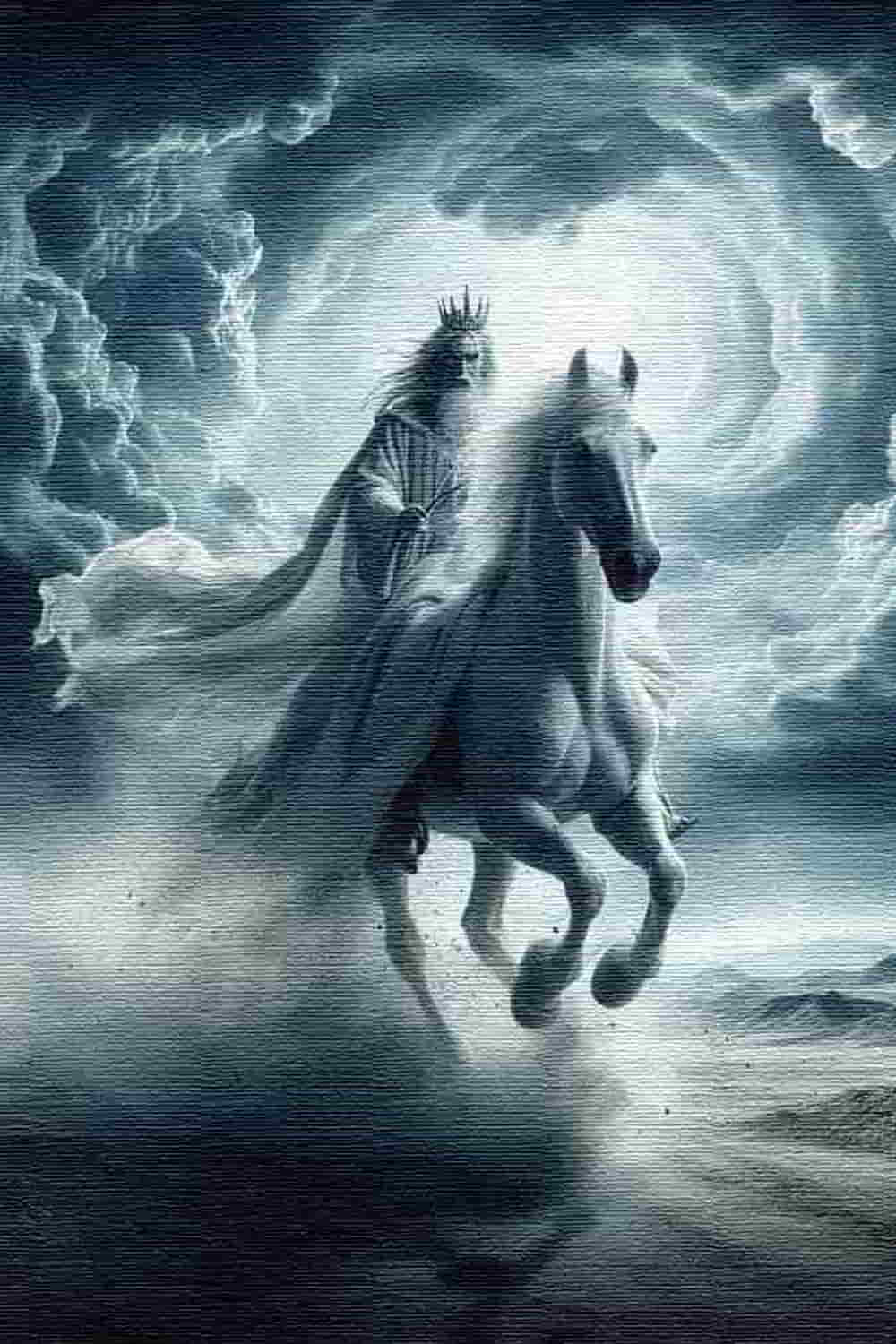
Let’s start with the first horseman of the apocalypse. He rides a white horse, and at first glance, the rider looks pure and noble, thanks to his white horse and his glorious appearance. He has a bow and is given a crown, which makes him seem heroic, but in truth, he is out for conquest!
“And I looked, and behold, a white horse. He who sat on it had a bow; and a crown was given to him, and he went out conquering and to conquer.”
(Revelation 6:2, NKJV)
People believe that the white horseman represents something or someone who pretends to bring peace and righteousness to the world, but instead spreads false promises and religious deceptions.
In essence, the white horse warns readers to be aware and cautious of leaders or ideas that look good on the surface but are actually dangerous or misleading underneath i.e., sometimes the greatest threats can come disguised as something good.
Scriptural Cross References
- Matthew 24:4-5: Jesus warns about people coming in His name, who will deceive many.
- Daniel 8:23-25: Daniel describes a king who comes with cunning and deceit.
- 1 John 2:18: Jesus talks about many antichrists that will come as a sign of the last hour.
- 2 Thessalonians 2:9-10: Paul describes the coming of “the lawless one” who will come with power, signs, and lying wonders.
2. The Red Horse – War
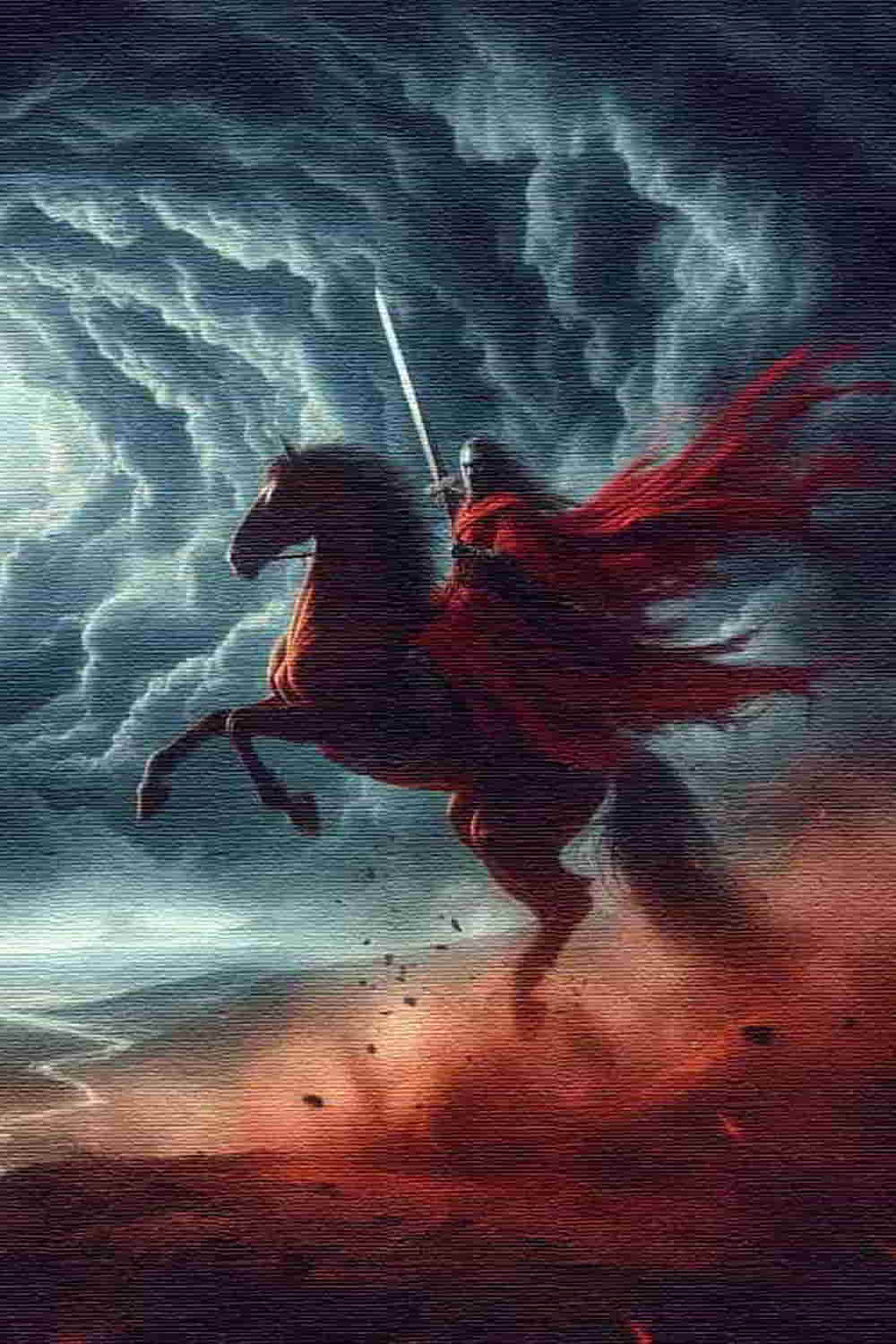
Next up: the second horseman with a red horse. This one isn’t subtle! The color says it all – this is the rider of war, violence, and bloodshed. He takes peace right out of the world, leaving behind conflict and division.
“When He opened the second seal, I heard the second living creature saying, “Come and see.” Another horse, fiery red, went out. And it was granted to the one who sat on it to take peace from the earth, and that people should kill one another; and there was given to him a great sword.”
(Revelation 6:4, NKJV)
The red horseman represents the destruction and death that war brings. His arrival foretells a time when war and suffering will erupt on a massive scale, leading to violent conflict that causes people to turn against one another.
The red horseman acts as a warning about the devastating consequences that come when peace disappears and human anger and hostility are allowed to run wild!
Scriptural Cross References
- Matthew 24:6-7: Jesus warns of wars and conflicts between nations in the last days.
- Joel 3:9-11: Joel prophesies that the nations are called to prepare for war.
- Zechariah 6:2-3: Zechariah’s vision of red horses symbolizes God’s judgment through war.
- Revelation 12:3-4, 7: John describes the red dragon and spiritual warfare in heaven.
3. The Black Horse – Famine and scarcity
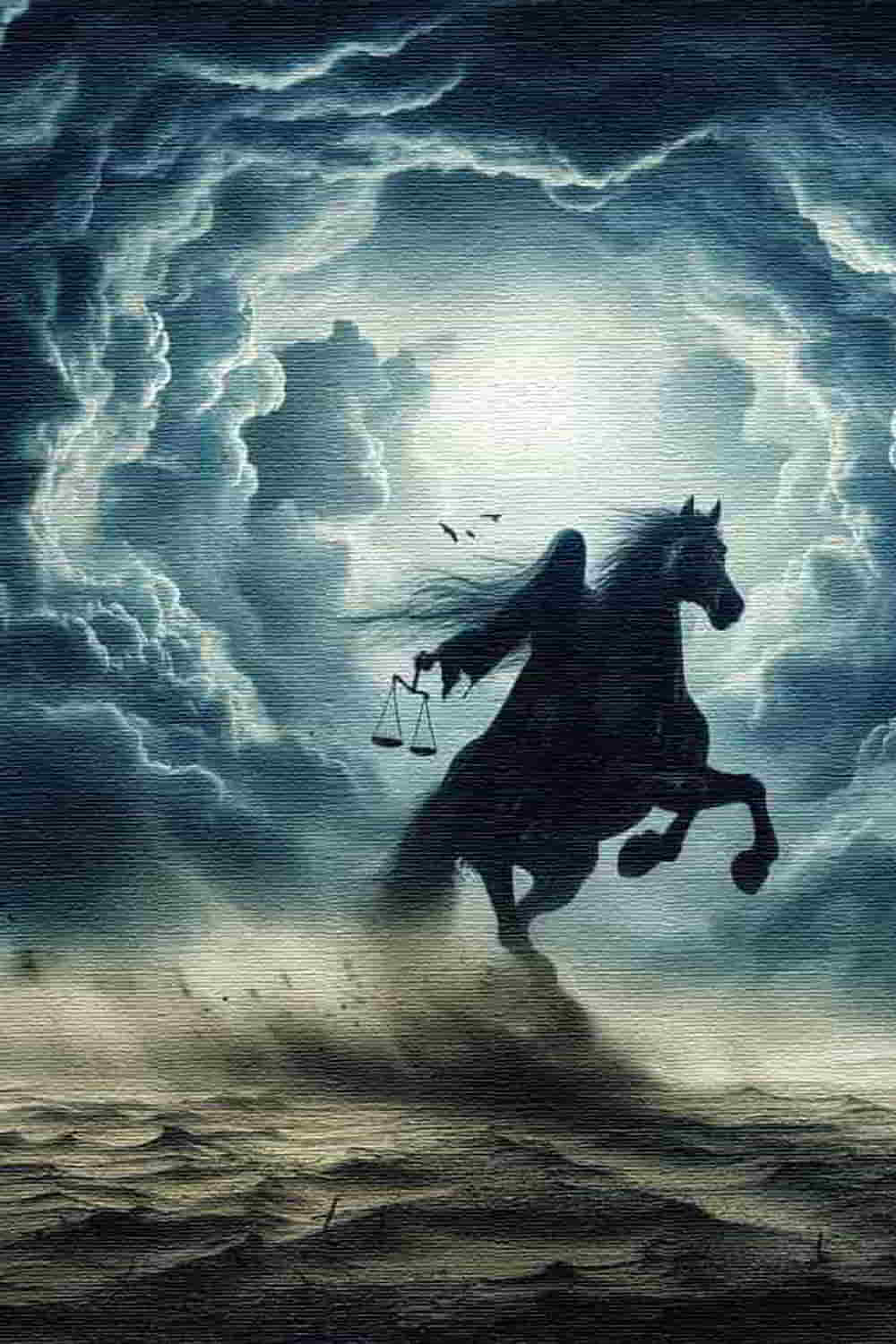
The third horseman of the apocalypse arrives with a black horse, and things get a bit more complicated. This rider carries scales symbolizing trade or the measurement of food. The message? Every day essentials become expensive, and people struggle to buy even the basics.
When He opened the third seal, I heard the third living creature say, “Come and see.” So I looked, and behold, a black horse, and he who sat on it had a pair of scales in his hand. And I heard a voice in the midst of the four living creatures saying, “A quart of wheat for a denarius, and three quarts of barley for a denarius; and do not harm the oil and the wine.”
(Revelation 6:5-6, NKJV)
In the ancient world, a “denarius” was roughly about a day’s wage for a laborer, so the scripture is saying that a person would have to spend an entire day’s earnings just to buy enough wheat for a single meal.
The scripture also mentions oil and wine. This is interpreted in different ways. Oil, which is mainly used for cooking and lamps, and wine might still be available, but only the wealthy will be able to afford them.
Others say that the scripture might be saying that certain crops like olive trees and grapevines, which are able to withstand droughts or plagues better than wheat, might survive, but staple crops like wheat will fail.
Either way, the Black Horseman foreshadows a time of struggle and unfairness where things are out of balance and ordinary people battle to survive while the rich are far less affected.
Scriptural Cross References
- Matthew 24:7: Jesus foretells famines as part of the signs of the end times.
- Mark 13:8: Jesus repeats that nation will rise against nation, and there will be earthquakes and famines in various places.
- Deuteronomy 28: God warns that future disobedience will bring famine, poverty, and economic ruin upon the nation.
- 2 Timothy 3:1: Paul says that the last days will bring perilous times, including social and economic hardship.
- Amos 8:11-12: Amos prophesies a future famine, not just of food, but of hearing God’s word as well, pointing to both physical and spiritual famine.
4. The Pale Horse – Death and Hades
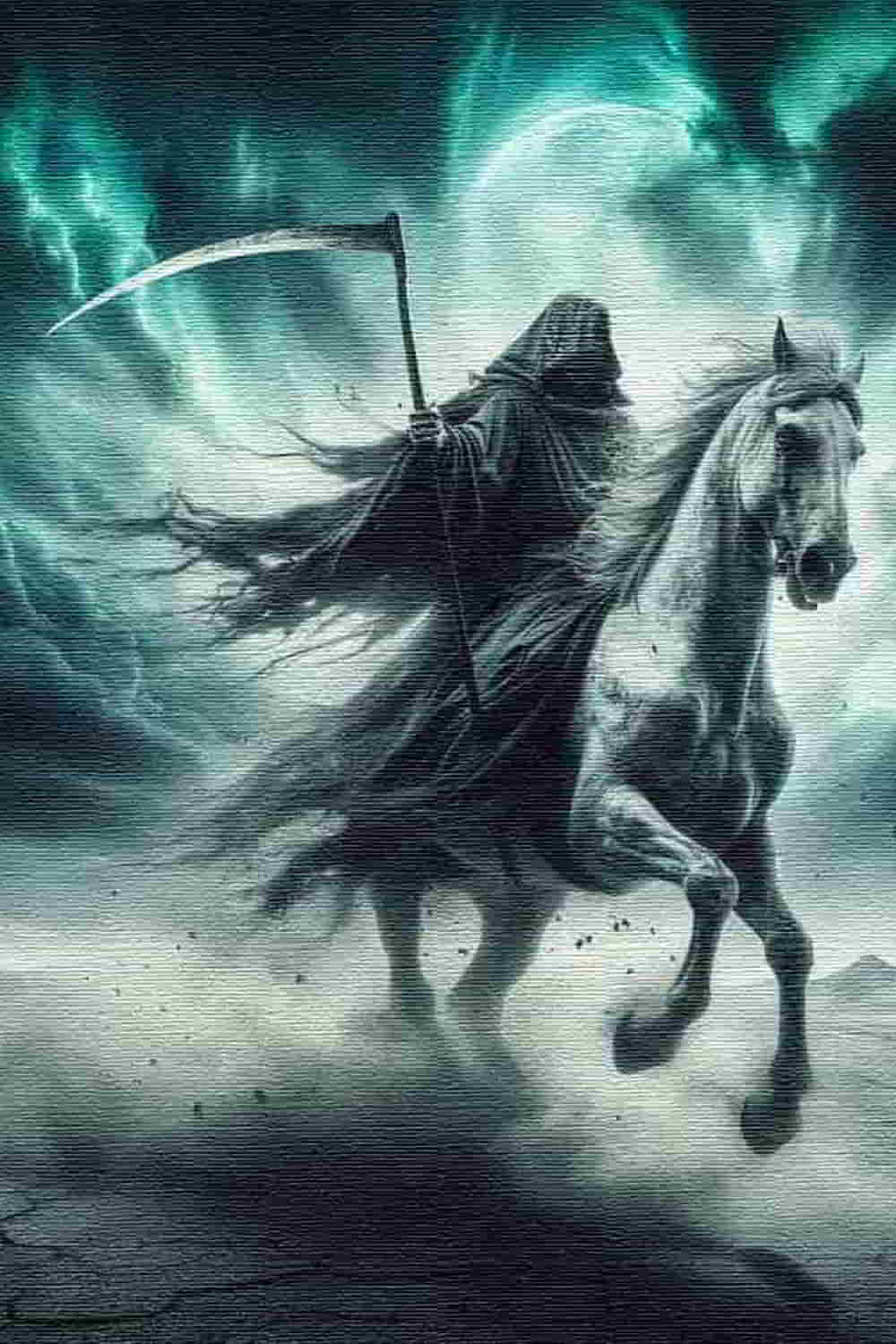
The last horse of the apocalypse is described as pale greenish-grey, sickly, and haunting. The rider is Death itself, with Hades (the grave) close behind. Together, they represent the ultimate result of the other horsemen: death.
“When He opened the fourth seal, I heard the voice of the fourth living creature saying, “Come and see.” So I looked, and behold, a pale horse. And the name of him who sat on it was Death, and Hades followed with him. And power was given to them over a fourth of the earth, to kill with sword, with hunger, with death, and by the beasts of the earth.” (Revelation 6:8, NKJV)
The scripture says that the final horseman is given authority over a quarter of the earth, bringing death by the sword (violence and war), famine (starvation), pestilence (disease), and attacks by wild animals.
The final horseman brings widespread death through every imaginable disaster. He represents the final devastating result of all the chaos unleashed by the horsemen who came before him. He warns of the consequences that follow when peace and justice break down in the world and how death follows sin, violence, and the unravelling of society.
Scriptural Cross References
- Ezekiel 14:21: God lists sword, famine, wild beasts, and plague as His four severe judgments sent against a land.
- Matthew 24:7-8: Jesus foretells that in the last days there will be famines, pestilences, and earthquakes as “the beginning of sorrows.”
- Romans 6:23: Paul teaches that the ultimate consequence of sin is death.
- Jeremiah 15:2-3: God decrees four forms of destruction – sword, famine, pestilence, and captivity – as judgment for persistent rebellion.
- Leviticus 26:25: God warns that if Israel is unfaithful, He will bring a sword and send pestilence among them.
- Habakkuk 3:5: Pestilence and plague are described as part of God’s coming judgment.
Summary – The Names Of the 4 Horsemen and Their Meanings
| Horse | Name | Symbolism | Key Passage |
|---|---|---|---|
| White | Conquest | Religious deception / conquest | Revelation 6:1–2 |
| Red | War | War, conflict, bloodshed | Revelation 6:3–4 |
| Black | Famine | Scarcity, famine, inequality | Revelation 6:5–6 |
| Pale | Death | Death by plague, beasts, sword, famine; Hades follows | Revelation 6:7–8 |
What Now? Hope Beyond the Horsemen Of The Apocalypse
Reading about the Four Horsemen can truly feel overwhelming and daunting! But the message of Revelation isn’t just darkness and doom.
Remember how each horseman appears when the “Lamb”, Jesus Himself, opens a seal? That’s not a coincidence. Even in chaos, God is still in control!
“And God will wipe away every tear from their eyes; there shall be no more death, nor sorrow, nor crying. There shall be no more pain, for the former things have passed away.”
(Revelation 21:4, NKJV)
The story of Revelation is ultimately a story of hope. After all the terrible trials and tribulations come the promises of God – everlasting peace in God’s presence and a new heaven and new earth.
No matter how dark the world may seem right now, you can trust that God’s love and justice will have the final word. The Lamb who opens the seals is also the Shepherd who leads us to springs of living water (Revelation 7:17).
Through faith, we can look forward to a future where all pain and evil are gone. So, when you read about the Four Horsemen, remember that God promises that joy always comes in the morning.
“Weeping may endure for a night, but joy comes in the morning.”
Psalm 30:5
Reflection Questions & Journaling Prompts
Final Thoughts
After reading about the Four Horsemen, it is natural to feel a little overwhelmed and even unsettled. They have a way of highlighting everything that makes the world feel so shaky and uncertain at the moment. But Revelation isn’t just meant to show us how bad things can get – it’s meant to remind us that, even in the darkest times, God is still in control and writing the story.
The Horsemen don’t have the last word – Jesus does! And He promises that He will be with us until the very end.
“…and lo, I am with you always, even to the end of the age.”
(Matthew 28:20, NKJV)