

How to Be Kind, compassionate, and Forgiving in everyday life.
Ephesians 4:32 comes from a letter Paul wrote to Christians in Ephesus, a bustling, multicultural city. Ephesus was home to the great temple of Artemis and a mix of people who didn’t all think or live alike. The church there was made up of both Jewish and Gentile believers learning to be one family under Jesus. This wasn’t easy. Different backgrounds meant different habits, expectations, and blind spots. People got on each other’s nerves. Miscommunication happened. Old ways of talking, reacting, and settling scores didn’t simply vanish overnight.
So in Ephesians 4, Paul describes what a Spirit-led community looks like. He tells them to put off the “old self” and put on the “new self”. That new self changes how we speak, work, feel anger, and treat each other. He warns them to get rid of bitterness, rage, brawling, and slander and to live lives of compassion and forgiveness.
The Verse
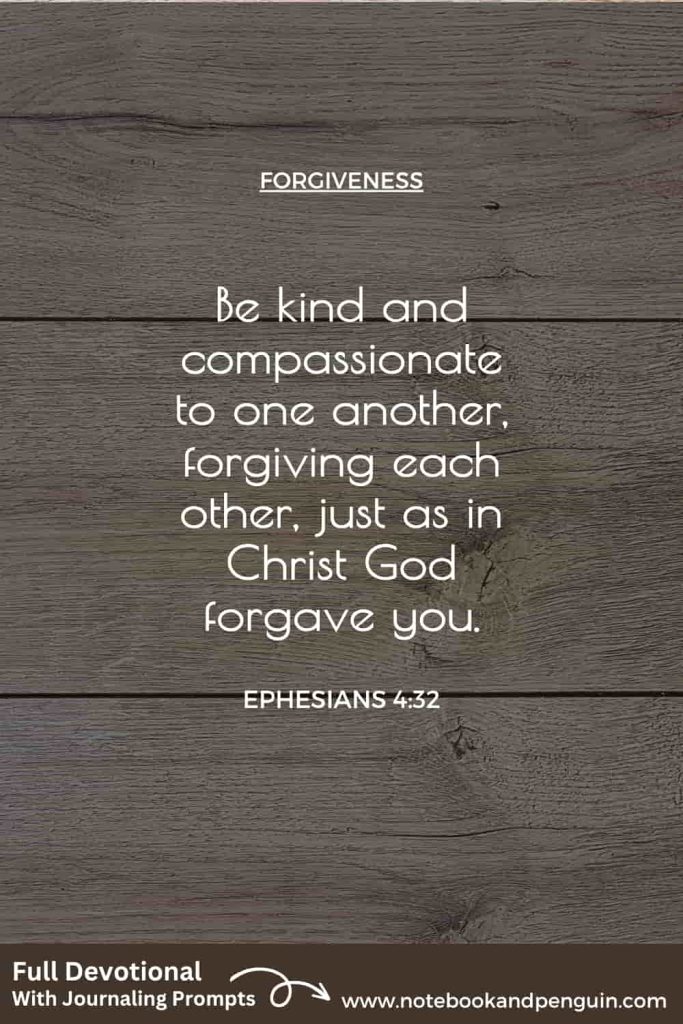
Be kind and compassionate to one another, forgiving each other, just as in Christ God forgave you.
Ephesians 4:32 (NIV)
Breaking down Ephesians 4:32
“Be kind…”
Kindness is a choice we make to do good, even if it isn’t deserved or when it costs something. In tense moments, kindness can disarm defensiveness and create breathing room.
“…and compassionate…”
Compassion (often translated as tenderhearted) means you are moved by someone’s pain. Not just noticing, but actually feeling. It’s the opposite of being hard-hearted. Compassion asks, “What could they be carrying that I can’t see? What wound could be fueling this behavior?”
Compassion doesn’t excuse sin, but it humanizes the person. Jesus looked at the crowds and “had compassion on them” because they were harassed and helpless, like sheep without a shepherd (Matthew 9:36). To follow Jesus is to let our hearts stay soft.
“…to one another…”
The Church of Jesus is like a family. Families need a lot of kindness and compassion because real life is messy. “One another” means this is how we treat fellow believers as well as everyone we meet in the world around us.
“…forgiving each other…”
Forgiveness is an act of grace. You release the debt someone owes you because of their wrong. You tear up the IOU. Forgiveness doesn’t deny the hurt but rather names the debt, then chooses to release it to God. Forgiveness frees your heart from bitterness, and it opens a door for reconciliation if and when trust can be rebuilt.
“…just as in Christ God forgave you.”
We forgive because we’ve been forgiven – God didn’t wait for us to clean up first. “While we were still sinners, Christ died for us” (Romans 5:8). Forgiveness isn’t something we manufacture by willpower. It’s something we pass along because we’ve received it first.
Why Being Kind And Compassionate Matters
Our world is short on patience and quick on outrage. Online comments can get vicious. Family group chats blow up. Workplaces simmer with resentment, and even churches can fracture. But Ephesians 4:32 calls us to a better way: Be kind. Be compassionate. Forgive.
This is not weak. It takes courage to stay kind when others are prickly. It takes strength to keep a tender heart when your instinct is to armor up. It takes faith to forgive when the wound feels fresh. But this way is freedom. It protects your soul from hardening.
Faith in Action
Try a few of these this week:
Practice the 3-second kindness rule.
Before you respond to something, pause for three seconds and ask, “What’s the kindest true way to say this?” Don’t fake it. Don’t sugarcoat the truth, but choose a tone that builds, not burns.
Put on compassion with a question.
When someone’s off, ask, “Hey, are you okay? Anything you want to chat about?” Compassion begins with curiosity. You might discover there’s a reason for the sharp edge, and your kindness could be just what this person needs.
Name the debt, then release it.
In your journal, write this down: “I feel [emotion] because [person] did/said [specific action]. What I want back is [what feels owed—time, apology, respect].” Then pray: “Father, because You forgave me in Christ, I choose to forgive [name]. I release this debt to You. Heal my heart and lead me in wisdom.” Tear up the note or keep it as a reminder that you’ve released it. If the pain resurfaces, revisit the prayer and release it again. Forgiveness is often a journey, not a single moment.
Combine forgiveness with wise boundaries.
Ask God, “What boundary would protect my heart and honor theirs?” That might mean fewer late-night texts, clearer expectations at work, or involving a mediator for tough conversations. Forgiveness can and should coexist with strong, healthy limits.
Replace venting with praying.
When you want to rant, pause and pray first. “Lord, You see it all. Calm my heart. Give me Your words.” After praying, decide whether sharing your story will help or just inflame the situation. If you still need to talk, choose a wise, safe person and beware of letting your conversation degrade into gossip and bitterness.
Reflection Questions
- Are there any situations where God is inviting you to “be kind” instead of “be right” this week? What could change if your first move was kindness?
- Think of a recent hurt. What is the specific debt you feel is owed to you? How would releasing that debt to God free your heart?
- Which boundaries would make forgiveness and an ongoing relationship safer and healthier in your situation?
- Who in your church, family, or workplace needs to experience your compassion right now? What is one small step you can take today?
Affirmation
Today, I choose kindness over cutting words, compassion over cynicism, and forgiveness over scorekeeping. God’s mercy to me becomes mercy through me.
Closing Prayer
Heavenly Father,
Thank You for forgiving me when I had nothing to offer. Your kindness has led me home. Make my heart like Yours – kind, tender, and quick to forgive. Show me where bitterness has taken root and uproot it by Your Spirit. Give me wisdom to set healthy boundaries and courage to pursue peace. Let my words carry healing, not harm. Use me to create a culture of grace in my home, church, and workplace. I receive Your forgiveness again today, and I pass it on freely.
In Jesus’ name, amen.